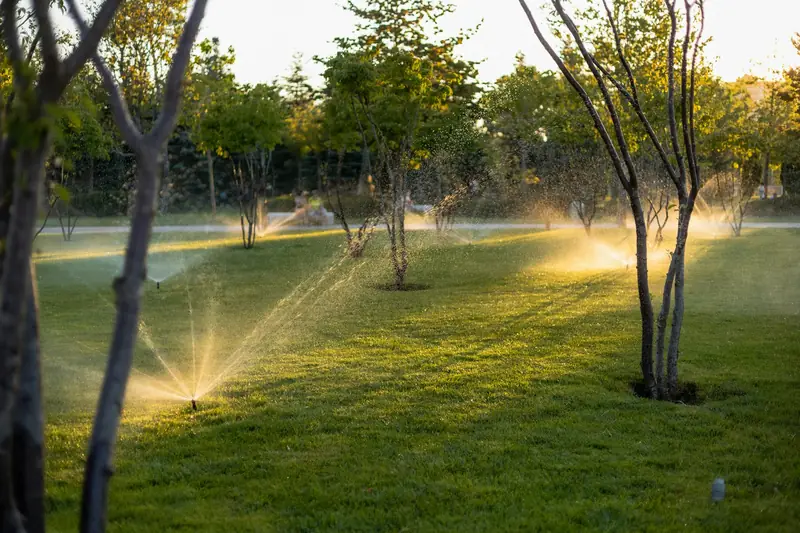
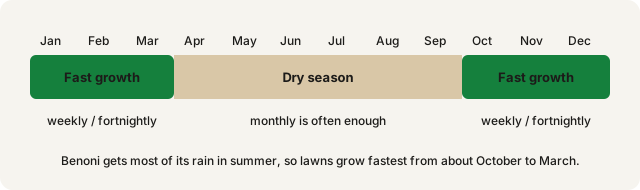
Benoni's lawns follow the Highveld seasons: fast growth in the hot, wet summer and a brown, dormant lawn after the first winter frosts. Most Benoni lawns are kikuyu or another warm-season grass, so the calendar below is built around that.
Late winter to early spring (August to September)
- Scarify once the worst frost has passed: cut out the old runners and thatch so new growth can come through. This is the busiest time of year for garden services, so book early.
- Top-dress thin or uneven patches with a thin layer of lawn dressing after scarifying.
- Fertilise with a lawn fertiliser once the grass starts growing again, and water it in.
Summer (October to March)
- Mow often and don't cut too short: a slightly longer lawn copes better with heat and shades out weeds. Weekly or fortnightly visits are common.
- Water deeply, less often: early morning watering, a couple of times a week when it hasn't rained, is better than a little every day.
- Feed again in mid-summer if growth slows or the colour fades.
- Watch for lawn caterpillar and other pests after rain spells, and ask your garden service to check.
Autumn (April to May)
- Growth slows. Mow less often and leave the lawn a little longer going into winter.
- A last light feed early in autumn helps the lawn recover from summer.
Winter (June to July)
- Kikuyu goes brown after frost. That's normal: the lawn is dormant, not dead.
- Water lightly every two to three weeks so the roots don't dry out completely.
- Monthly garden visits are usually enough: tidying beds, pruning and clearing leaves.
What to agree with your garden service
Ask what each visit includes in summer and in winter, whether scarifying and top-dressing are priced separately, and whether garden refuse is removed. See garden service prices in Benoni.